Table of Contents
It’s a confronting question, and often one we don’t arrive at intentionally. For many women — particularly Christian women — it arrives suddenly, like a carpet being pulled out from underneath us. One moment, life looks carefully ordered and “right.” The next, things begin to fall away. And when they do, we are forced to look closely at where our self worth has truly been anchored.
For much of my life, I believed I was living well. I was doing the right things, making faithful choices, building what appeared to be a good and purposeful life. And yet, within a relatively short period of time, I lost significant relationships. I lost a career I had invested deeply in. The life I thought I had carefully built — and quietly performed — did not hold in the way I expected it to.
That loss arrested me by surprise. What I had assumed was stability revealed itself to be fragile. In those moments, I began to see how much of my self value as a Christian woman had been tied to roles, usefulness, productivity, and visible faithfulness. When those things were removed, I was left with a question I could no longer avoid: Who am I when there is nothing left to prove?
This kind of unraveling often feels deeply personal, but it is not uncommon. Many of us, in our desire to live faithful and meaningful lives, unknowingly build a performance-based identity — even within our walk with God. We serve, strive, achieve, and present ourselves in ways that feel righteous, responsible, and approved. And yet, when life strips those markers away, we are left searching for something deeper.
Perhaps this is the hidden work of finding purpose as a Christian woman — not in constructing a perfect life, but in learning to rest in an identity that cannot be taken from us. Letting go of performance is rarely gentle. It can feel disorienting and exposing. But it may also be the doorway into a quieter, truer, and more grounded faith.
The Early Years: Learning to Be “Good Enough”
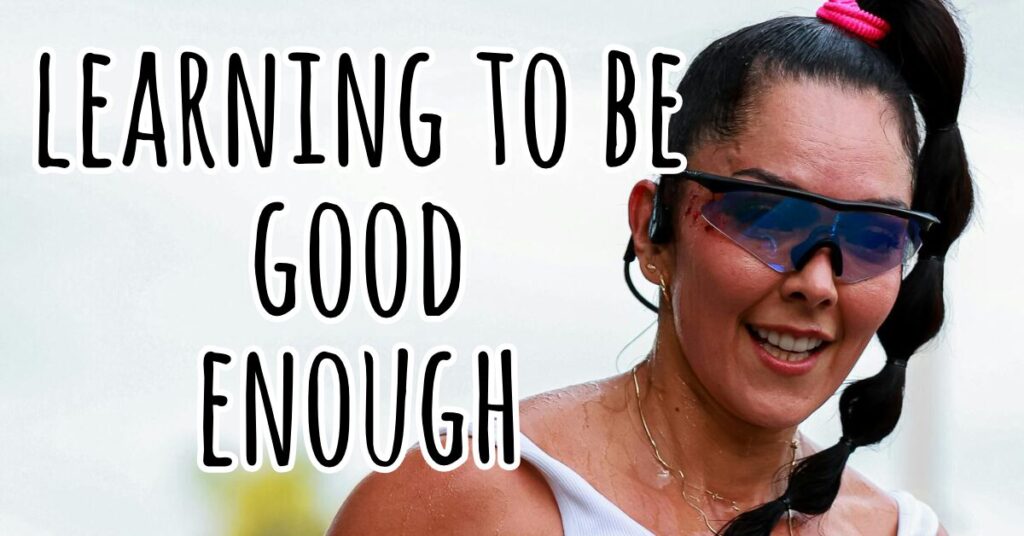
Looking back, I can see that the first thirty years of my life were shaped by a quiet, persistent belief: I must be good enough to belong. It wasn’t a belief I consciously chose, and no one explicitly taught it to me. It simply formed — slowly and subtly — through culture, expectations, and the messages absorbed along the way.
Being “good enough” meant several things. It meant looking the right way — staying thin, toned, and disciplined. It meant doing the right things — achieving, working hard, serving faithfully. And it meant being approved of by others, whether that approval came through affirmation, acceptance, or simply the absence of criticism. My sense of self worth was being shaped long before I had language for it.
Like many women of my generation, I grew up during a time when fitness and beauty were narrowly defined. Aerobics classes, calorie counting, constant dieting, and chasing a particular body shape felt normal — even responsible. Appearance was framed as self-control, and discipline was praised as virtue. I remember trying to keep up with those ideals, often at the expense of gentleness toward myself. At the time, it didn’t feel extreme. It felt expected.
What I didn’t recognise then was how early performance had entered the picture — not only physically, but emotionally and spiritually as well. Approval became a quiet motivator. Achievement became reassurance. And without realising it, my self value as a Christian woman began to intertwine with how well I was managing, striving, and presenting myself to the world.
Performance rarely announces itself. It doesn’t arrive loudly or dramatically. It settles in quietly, disguising itself as responsibility, faithfulness, or “doing the right thing.” And over time, it becomes difficult to tell where genuine devotion ends and self-protection begins.
This is often the starting point for many women who later find themselves questioning identity and purpose. Long before we begin consciously finding purpose as a Christian woman, we have already learned how to earn belonging — and that lesson can take years to unlearn.

The Body as Proof: Self Value as a Christian Woman
For many women of my generation, the body quietly became part of the proof — evidence that we were disciplined, committed, and “doing life well.” Appearance was not just about beauty; it was about virtue. To look a certain way suggested effort, control, and worth. Without realising it, the body became something to manage rather than something to inhabit.
Constant exercise was normal. Weight loss was assumed to be a goal. The ideal body was tall, lean, and unmistakably shaped by the 1990s supermodel image that surrounded us. Fitness culture reinforced the message that discipline equalled value, and value equalled acceptance. At the time, this didn’t feel extreme. It felt responsible — even admirable.
I remember how ordinary it all seemed. Taping early-morning aerobics programs on the VCR. Following calorie counters with the seriousness of study. Counting calories alongside a friend, believing this was simply what it took to be healthy, confident, and enough. Even prayer found its way into the mix — asking God for a taller frame, a closer resemblance to the ideal we were taught to admire.
What stands out now is not the behaviour itself, but how seamlessly it blended into everyday life. This way of thinking was praised, encouraged, and rarely questioned. Discipline was celebrated. Thinness was equated with health. And striving was framed as commitment. My self worth was quietly reinforced through effort, and my body became another place where performance was measured.

Only later did I begin to question what this cost — emotionally, spiritually, and relationally. What happens when the body becomes a project rather than a gift? When care slips into control, and discipline into pressure? For many women, especially within faith communities, this performance is rarely named. It hides behind good intentions and responsible language.
Yet over time, it can distance us from a gentler understanding of our bodies — and from a deeper sense of self value as a Christian woman. When appearance becomes proof of worth, rest feels undeserved, grace feels conditional, and acceptance feels fragile. This is not how faith was meant to shape our relationship with the body, but it is a pattern many of us learned without ever being taught.
When the Performance No Longer Holds
There comes a moment when the structures we have built can no longer carry the weight we have placed upon them. For me, that moment did not arrive all at once, but it arrived decisively. Within a relatively short period of time, things I had relied on — relationships, work, roles — began to fall away. What I had assumed was stability revealed itself to be temporary.
The loss was disorienting. When the markers that once confirmed my value were removed, I found myself face to face with a question I had managed to avoid for years: Who am I without the performance? Without the productivity, the usefulness, the visible faithfulness, the carefully maintained image — what remained?
This is where performance-based identity shows its limits. Achievement could no longer reassure me. Appearance could no longer steady me. Even service could not restore the sense of safety it once provided. The familiar strategies stopped working, and the self worth I had quietly built upon them began to feel fragile.
There is a particular kind of grief that comes with this realisation. Not just grief for what is lost, but grief for the energy spent proving what never needed to be proven. I began to see how much of my self value as a Christian woman had been tied to things that could be taken away — and how little space I had allowed for simply being known and loved without contribution.
What remained was uncomfortable but honest. A quieter faith. A smaller sense of self. A deep uncertainty about finding purpose as a Christian woman when the old definitions no longer applied. And yet, beneath that uncertainty, there was also a subtle invitation — to release the need to perform, and to receive an identity that did not depend on effort.

Faith Beyond Performance
What began to emerge in the quiet that followed was not a new strategy, but a different posture. Faith no longer felt like something to manage or maintain. It became less visible, less impressive, and more honest. There was no audience to satisfy, no standard to meet — only the slow work of learning to trust what could not be earned.
Without the familiar markers of achievement and approval, faith grew simpler. Prayer became less polished. Scripture became less instructional and more sustaining. Stillness, once uncomfortable, began to feel necessary. This was not a loss of devotion, but a reorientation of it.
I began to see how deeply my self worth had been shaped by effort — even in spiritual spaces. Letting go of performance required unlearning the belief that closeness to God depended on output. Instead, faith invited presence. Not usefulness. Not visibility. Presence.
This shift reshaped how I understood self value as a Christian woman. Value was no longer something to protect through discipline or demonstrate through service. It existed prior to action. It remained intact even when nothing was being produced, improved, or offered.

Purpose, too, began to soften. Finding purpose as a Christian woman no longer meant doing more or proving faithfulness. It meant living from a place of belonging rather than striving toward it. Purpose became less about direction and more about depth — how I showed up in ordinary moments, how I listened, how I rested, how I allowed myself to be human.
Faith beyond performance does not announce itself. It does not hurry. It does not demand certainty. It holds room for limits, grief, and grace — not as failures, but as part of a life lived honestly before God.
Who Are You When You Stop Performing?
When the layers of performance fall away, what remains can feel unfamiliar. But it is also where truth begins. Without the pressure to prove worth, identity becomes quieter and more grounded. Faith becomes less about what is done and more about who is held.
For many Christian women, the journey out of performance is not dramatic. It is gradual. It happens in small decisions to rest, to say no, to be unseen, to trust that worth is not at risk when productivity slows. It is the courage to believe that love does not withdraw when effort ceases.
This kind of faith does not diminish devotion — it deepens it. It creates space for honesty, for dependence, and for peace. And while the question Who are you when you stop performing? may feel unsettling at first, it ultimately opens the door to a life shaped not by striving, but by grace.
Ingalittlemissduchess_n6fudiEdit Profile